Review · GRAND CAYMAN TOURS
Introductory Semi-Private Kitesurf Lesson
Your first ride may be closer than you think. This two-hour lesson at Seven Mile Beach gives you a careful introduction to kitesurfing, beginning with kite control before moving into board work and those exciting first starts. I like the small setup, with only two people sharing one instructor, and I like that the equipment and selected-hotel transfers are included. The main catch is simple: two hours is enough for a strong first taste, but not enough for most beginners to become independent riders.
I also appreciate the way the lesson splits the cost between two people. At $400 per group, the price works out to $200 each when two people book together, which is much easier to justify than a private lesson. Instructors such as Pedro, Louis, Will, Jhon, and Miguel have helped beginners progress, while Natasha has handled scheduling and communication for many guests.
You need good weather for this activity, and wind sports do not follow a cruise timetable or a vacation plan perfectly. If conditions are poor, the lesson may be moved or refunded, so keep some flexibility in your Cayman schedule.
In This Review
- Key points to know before booking
- Why this is a good first Cayman water sport
- What happens during the two-hour lesson
- The shallow-water advantage at Seven Mile Beach
- How much personal attention do you really get?
- What the price includes, and what it does not
- Is two hours enough for a beginner?
- Booking around weather and cruise schedules
- Who will enjoy this most?
- Should you book the semi-private lesson?
- FAQ
- How much does the semi-private kitesurf lesson cost?
- How long is the lesson?
- How many people take part?
- Is equipment included?
- Is hotel pickup available?
- Can cruise ship passengers take this lesson?
- What happens if the weather is poor?
- What is the cancellation policy?
Key points to know before booking
- Two people share a two-hour lesson: You get more instructor time than in a large class while keeping the cost below a private session.
- Kite handling comes first: Expect to learn how to fly and control the kite before using the board.
- The water can make learning easier: Several accounts describe calm, clear, shallow water where instructors can walk out with students.
- Equipment is supplied: You do not need to bring a kite or board for this introductory session.
- Hotel pickup is available at selected hotels: Cruise passengers can also arrange pickup, but must provide ship and port timing.
- The strongest value comes from booking with a partner: At full capacity, the $400 group price becomes $200 per person.
Why this is a good first Cayman water sport
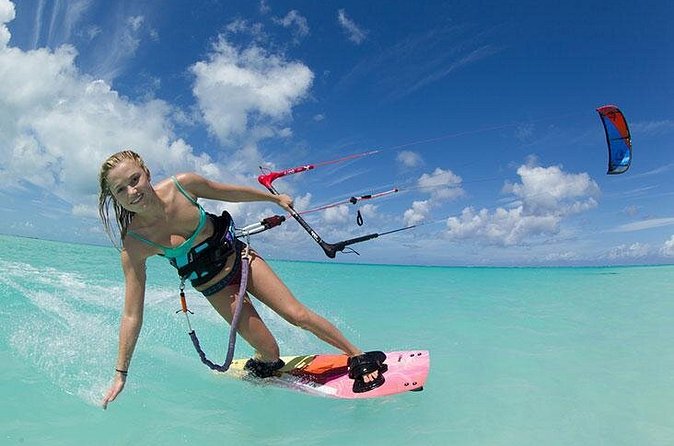
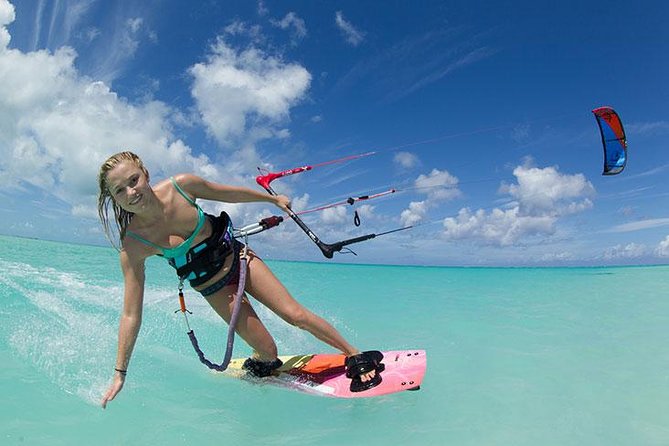
Kitesurfing looks dramatic from shore. A rider skims across the water with a large kite overhead, and the whole thing can seem like a stunt best left to people with excellent balance and a suspicious amount of courage. This lesson breaks that image into manageable steps.
You first learn to fly, handle, and control the kite. That order matters. The kite provides the power, and if you cannot steer or correct it, the board will only add confusion. Once your kite skills are solid, the instructor brings in the board and works toward water starts and short board runs.
That progression gives you a fair chance to understand what is happening instead of simply being pulled around. You may not ride far in two hours, but you should leave knowing whether kitesurfing is worth pursuing with more lessons.
The setting helps. The Cayman Islands are known for favorable kitesurfing conditions, and the teaching area has been described as calm, clear, and shallow. Those features are especially useful during a first lesson. Shallow water lets an instructor stay close and, in suitable conditions, walk out with you while you practice.
That does not make the sport effortless. You still need to manage the kite, body position, timing, and board. But a forgiving practice area removes some of the stress that comes with learning in deeper or rougher water.
A few more Grand Cayman trips worth comparing
- Stingray City Experience Plus Two Snorkeling Stops on Grand Cayman
★ 5.0 · 1,477 reviews - Starfish Point, Stingray City & Coral Garden (3-STOP Adventure)
★ 4.5 · 1,168 reviews - Night Bioluminescence Snorkel Tour
★ 5.0 · 987 reviews
What happens during the two-hour lesson
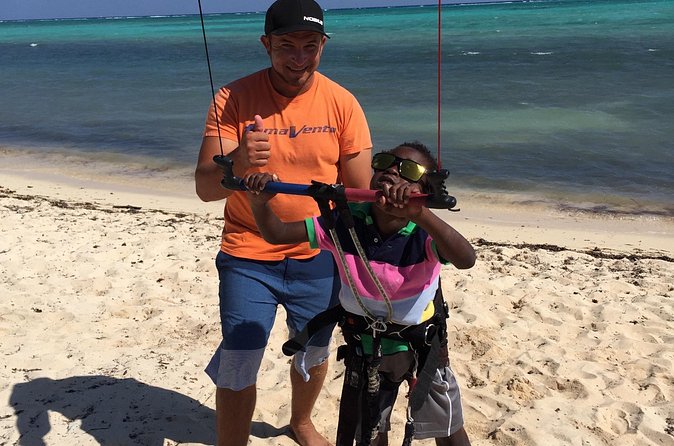
The experience is built around practice rather than sightseeing. Your instructor starts with the kite itself, showing you how it flies and how small control movements affect its direction and power.
You will work on handling the kite and keeping it under control. This is the most important part of the lesson, even if it is less glamorous than standing on the board. Pay close attention here. The better you understand the kite, the more useful your later board practice becomes.
The semi-private format means you share the kite and board with one other person. That has a clear benefit and a clear limitation. You get far more personal attention than you would in a large group, but you are not practicing every second. While the instructor works with your partner, you have time to watch, listen, and prepare for your next turn.
That waiting time can be useful if you treat it as free instruction. Watch how the other person positions the kite and responds to corrections. You may spot mistakes before making the same ones yourself.
After the kite work, the instructor introduces the board. The goal is to reach the first water starts and short board runs. Some beginners have managed to stand during the first lesson, while others needed several sessions before riding with control. Your result will depend on wind, coordination, previous experience, and how quickly the basic kite skills settle in.
The tour description does not promise a guaranteed ride, and that is a good thing. Wind sports are too dependent on conditions and individual progress for a responsible instructor to promise that everyone will be up and moving by the end.
The shallow-water advantage at Seven Mile Beach
The teaching area is one of the most important parts of this experience. Several detailed accounts describe calm, crystal-clear, shallow water, sometimes around knee depth, with enough room for an instructor to walk beside a student.
For a beginner, this is far more than a pretty backdrop. You can concentrate on kite control and board position without worrying as much about deep water. An instructor can stay physically close during early practice, which makes corrections faster and helps you regain your footing.
The area has also been described as a protected spot with calm water and good wind for teaching. One cruise passenger recalled being collected near the port and taken to the kite location, including a rough road on the way. That detail is worth knowing because the setting may feel more like a working water-sports base than a polished beach resort.
That is part of the appeal. You are going out to learn a sport, not simply posing with equipment beside the sea. Still, conditions can change. Calm water and useful wind are ideal, but no two sessions are identical, and the operator may need to adjust plans if the weather is unsuitable.
How much personal attention do you really get?
The lesson is semi-private for a maximum of two people. This is the sweet spot for many couples, friends, parents and older children who want instruction without paying the full private rate.
At $400 per group, two people pay $200 each. You share the kite, board, and instructor, but the group remains small. That is a sensible arrangement for a first attempt, especially when you are not sure yet if kitesurfing will become a serious hobby.
Several instructors have been praised for patience, clear teaching, and positive coaching. Pedro has been singled out for thorough instruction and patience. Louis helped a couple reach standing board starts during their first lesson. Will was described as encouraging during a two-day lesson, and Jhon, Miguel, and the wider team have worked with both first-timers and returning students.
The operator has also worked with a wide range of ages and abilities. One first-time participant began at age 61 and took five days of lessons. A parent and nine-year-old child also completed a first lesson together. The provided information says most people can participate, but it does not give a specific minimum age or fitness standard, so ask before booking if that matters for your group.
Same island, a completely different afternoon:
- Stingray City and Starfish Experience with Coral Reef Snorkeling
★ 4.5 · 924 reviews - Stingray City Experience Plus One Snorkeling Stop
★ 5.0 · 577 reviews - Private, luxury, custom charters to Stingray City, Snorkeling & More
★ 5.0 · 488 reviews - Private Half Day Stingray City, Snorkeling and Starfish Beach Tour
★ 5.0 · 465 reviews
What the price includes, and what it does not
The $400 price covers one group of up to two people. Necessary equipment is included, so you do not need to arrange a separate kite or board rental for this introductory session.
Selected hotels also receive pickup and drop-off. That saves time and avoids the nuisance of arranging transport to a beach location you may not know. The pickup benefit is not universal, though, so confirm that your hotel is on the service list before assuming it is included.
The value is strongest when two people book together. A private activity at $400 might feel expensive for a two-hour introduction, but splitting the cost makes this a practical way to try the sport. You are also paying for instruction, equipment, and transport rather than simply renting gear and guessing what to do.
There is a useful path for people who become hooked. The school also handles longer lesson programs and equipment rentals, according to the experiences described by returning customers. Some students continued for several days, then moved toward independent rentals. That makes the introductory lesson a sensible first step, not a one-off activity with nowhere else to go.
Still, you should judge the price against your goals. If you only want a quick beach activity and do not care about learning technique, this may be more instruction than you need. If you want to understand the sport properly and possibly continue, the small group and included equipment make more sense.
Is two hours enough for a beginner?
Two hours is enough to learn the basic idea of kitesurfing and begin practicing the skills that matter. It may also be enough for a confident beginner to stand on the board or complete a few short runs.
It is not usually enough to become self-sufficient. The most encouraging accounts involve multiple lessons. One participant progressed from repeated face plants to riding upwind and downwind after three lessons, while another family described young riders getting up and kiting independently after six hours of instruction.
That gives you a useful benchmark. Think of this session as an introduction, not a complete course. Your first goal should be safe kite control and a clear understanding of the next steps. A successful lesson is not measured only by distance traveled.
The semi-private format is especially good for this first session. If you enjoy the sport, you can then choose a private lesson to progress faster. One experienced participant specifically found the semi-private arrangement ideal for the first lesson, then recommended private instruction for a follow-up.
Booking around weather and cruise schedules
Kitesurfing needs suitable weather, so the operator may cancel if conditions are poor. In that case, you are offered another date or a full refund. This is helpful, but only if you leave room in your schedule.
The cancellation rules are strict close to departure. Cancel at least 24 hours before the local start time for a full refund. Cancellations or changes made within 24 hours are not refunded or accepted.
Cruise passengers need to provide the ship name, docking time, disembarkation time, and re-boarding time when booking. Pickup near the port has been arranged for cruise passengers, but you should still allow enough time for transport, instruction, and a comfortable return to the ship.
I would not put this lesson on the last possible morning of a cruise stop. Weather can force a change, and water activities rarely run with the same clockwork certainty as a museum visit.
Who will enjoy this most?
This experience suits you if you want active instruction rather than a passive beach day. It is a good match for couples and friends who want to share the cost, families with suitable participants, and anyone curious about a sport that may become a longer-term hobby.
It also works well for people who have tried kitesurfing elsewhere and want to improve in calm, shallow water. Several accounts compare this school favorably with instruction in places such as Cabarete, Aruba, Mexico, and Brazil, especially for safety, equipment, radio communication, and teaching conditions.
The lesson may be less suitable if you need a guaranteed result in one short session. Nobody can promise that you will ride by the end. You should also be comfortable with a physical water activity and willing to follow careful instruction before getting to the exciting part.
The equipment and transfer arrangements remove two common barriers. You do not need to travel with specialist gear, and selected hotels can receive pickup and return service. The remaining question is whether you have enough time and patience to learn the basics properly.
Should you book the semi-private lesson?
I would book it if you and a partner want a real introduction to kitesurfing, especially if you can keep another day open for a follow-up lesson. The $400 group price is reasonable when split between two people, and the small class gives you meaningful access to the instructor.
I would also choose it over a large beginner class if personal correction matters to you. The calm, shallow teaching area, included equipment, and patient instructors such as Pedro and Louis give you a strong setup for those first water starts.
Book with realistic expectations. You may stand and ride, or you may spend the session learning to control the kite. Both outcomes can be valuable. If you want to progress quickly, plan on additional lessons and consider switching to private instruction after this first taste.
FAQ
How much does the semi-private kitesurf lesson cost?
The experience costs $400 per group of up to two people. If two people participate, the cost works out to $200 per person.
How long is the lesson?
The lesson lasts approximately two hours.
How many people take part?
This is a private activity for your group, with a maximum of two participants. The two people share the instructor, kite, and board.
Is equipment included?
Yes. The necessary kitesurfing equipment is included in the lesson price.
Is hotel pickup available?
Hotel pickup and drop-off are included for selected hotels only. Confirm that your hotel qualifies when booking.
Can cruise ship passengers take this lesson?
Yes. Cruise passengers must provide the ship name, docking time, disembarkation time, and re-boarding time when booking.
What happens if the weather is poor?
The experience requires good weather. If it is canceled because of poor conditions, you can choose another date or receive a full refund.
What is the cancellation policy?
You can cancel at least 24 hours before the local start time for a full refund. Cancellations or changes made less than 24 hours before the start time are not accepted, and the amount paid is not refunded.
Recently added around Grand Cayman
- Sunrise at Stingray City, Private Tour★ 5.0 · 6 reviews
- Exclusive Cayman Underwater Adventure: Yellow Submarine Cayman★ 3.5 · 2 reviews
- Stingray City and Seven Mile Beach Adventure Tour★ 4.5 · 3 reviews
- Stingray City, Coral Gardens & Frankie’s Local Lunch & Juice★ 5.0 · 6 reviews
- Stingray City Sandbar, Snorkel, Star fish Beach (Family operated)★ 4.5 · 2 reviews
- Scenic Island Private Tour★ 4.5 · 2 reviews
- Private Vacation Photoshoot with Photographer in Grand Caymen★ 5.0 · 2 reviews
- Private Stingray City Snorkeling and BioBay Charter for 10 Guests★ 5.0 · 5 reviews
Grand Cayman Tours, compared.
Stingray City Experience Plus Two Snorkeling Stops on Grand Cayman
Read our review →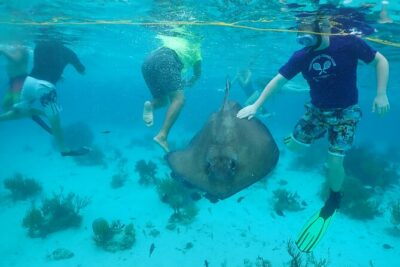
Starfish Point, Stingray City & Coral Garden (3-STOP Adventure)
Read our review →
Stingray City and Starfish Experience with Coral Reef Snorkeling
Read our review →
Stingray City Experience Plus One Snorkeling Stop
Read our review →
Private, luxury, custom charters to Stingray City, Snorkeling & More
Read our review →
Private Half Day Stingray City, Snorkeling and Starfish Beach Tour
Read our review →